DEVLOG #1 · FIST II REMASTER · THE ORIGINAL
Where it starts: Fist II, 1986
· 3 min read
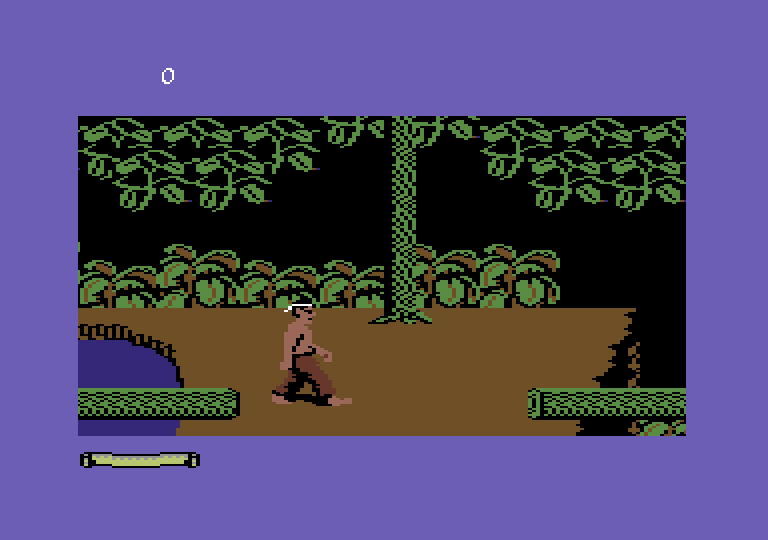
Before there was a remake, there was a tape. This is the game we're taking apart, and what we found in the first evening with it.
The original
Fist II: The Legend Continues came out in 1986 from Melbourne House, developed by Beam Software in Australia, for the C64 and the ZX Spectrum. It followed The Way of the Exploding Fist (1985), the one-on-one karate game, but it left the tournament mat behind: Fist II is a scrolling adventure with one-on-one fights along the way.
The story, as Zzap!64 told it in December 1986: an evil, deformed Warlord in a volcano fortress has overthrown the cult of the Exploding Fist and razed its temples. The eight scrolls that hold its techniques, the Trigrams, are lost. You find each one, carry it to its shrine and meditate there to take in its power, which also earns you an extra life. On the way: peasant soldiers, warriors, masked Shoguns and assassins, mutated animals, pits and walls of fire. You fight with seventeen moves, on the joystick system of the first game.
On the C64 the game is credited to Gregg Barnett (design and code), Greg Holland and Russel Comte (graphics) and Neil Brennan (music). It cost £9.95 on tape and £14.95 on disk, and the other side of the tape held a tournament version of the first game.
ZZAP!64 #20
39%
YOUR SINCLAIR
9/10
SINCLAIR USER
5/5
CRASH
58%
What the press said
Not much love on the C64. Zzap!64 gave it 39% and called it "disappointing and severely lacking in content": slow, juddering scrolling, bugs, no title screen and no game-over screen. One reviewer even claimed a tune was lifted from the disk version of The Hobbit. The Spectrum version did far better, with 9/10 from Your Sinclair and 5/5 from Sinclair User.
Under the reviews sits an engine with a scrolling world, fighters built from sprite pieces, and a joystick system worth keeping. That engine is what this project is about.
Day one: the tape
On 6 October I started with the tape image. TapClean read it clean: 302 of 302 blocks OK, a Super
Pavloda turbo loader, one bootable part called FIST-II, no gaps. The
loader runs from the stack page ($0131) and, even in VICE with warp on,
takes four to five minutes. It ends in the game itself, in the first jungle room.
Day one: the first dump
Then a snapshot of memory with the game running: the first room, the hero standing. The main loop sits at
$2204, the game runs its own raster interrupt, and the VIC looks at
the top bank ($C000–$FFFF): screen at
$CC00, charset at $E800,
multicolour. All eight sprites are on, and their positions are rewritten during the frame: the fighters
are built from pieces and multiplexed.
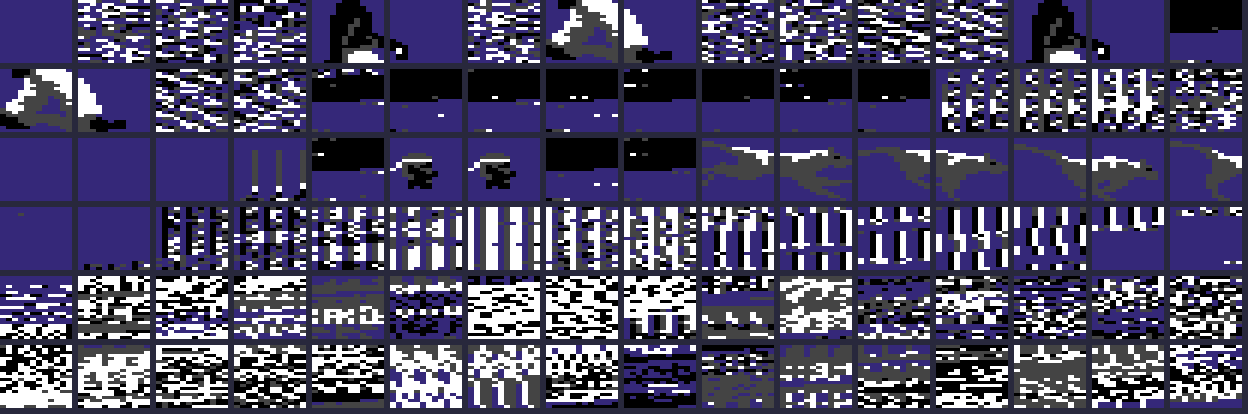
$C000 bank drawn as graphics: the charset, the sprite pieces, everything the VIC can see.
The joystick code turned out to be neat. One routine at $3390 reads
the port, keeps fire and the four directions, swaps left and right when the fighter faces the other way,
and looks the result up in a 32-byte table at $33c2 that turns the stick
into a move. Each fighter keeps a requested move, a current move and a facing.
One small surprise: a SpritePad file of Fist moves I had turned out to be white-gi art from the first game. Not one of its sprites appears byte for byte in Fist II.
The rule from day one
The brief for the whole project was written that night: every claim is tied to an address and marked verified or guess, and every asset we lift out must rebuild to identical bytes. That rule is what made the next day possible.
Sources for the original game: